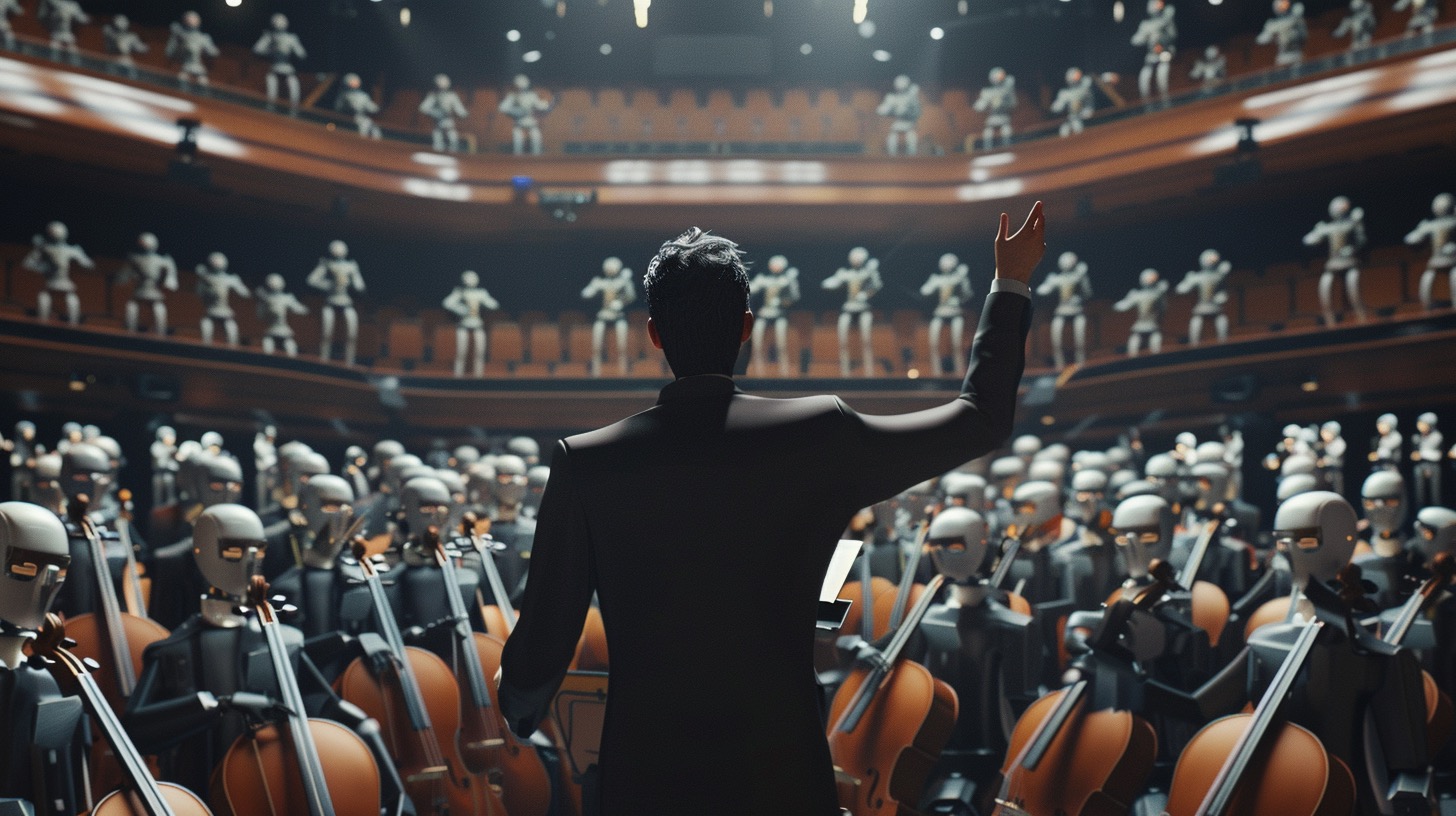
The integration of AI into the music industry has made remarkable progress in recent years and has even fundamentally changed various aspects of music creation, distribution and consumption.
Music production and composition
AI-powered tools such as Google’s MusicLM, iZotope and Splice enable artists to create and remix music in innovative ways. These technologies automate routine tasks, making the creative process easier and giving artists more room for innovation. Platforms such as AIVA even offer the option of composing and editing complete pieces of music in different styles. This works because they have access to a huge database of iconic musical works.
Vocal synthesis and voice emulation
Companies such as Vocaloid have developed advanced vocal synthesizers that make it possible to create realistic-sounding vocals. This technology analyzes human vocal recordings and creates a database of phonic components that allows users to enter lyrics and produce realistic singing voices.
Personalized music recommendations and streaming
Streaming services such as Spotify and Apple Music use AI algorithms to create personalized playlists based on users’ listening habits. These personalized recommendations significantly improve the listening experience and help users discover new music that matches their individual preferences.
Ethical and legal challenges
The use of AI in music raises complex legal issues, particularly in relation to copyright and the authenticity of AI-generated works. A prominent example of this is the viral AI-generated song“Heart on My Sleeve“, which imitated the voices of Drake and The Weeknd and raised legal concerns regarding the protection of intellectual property. There are also ethical concerns regarding transparency and disclosure of the use of AI in music production, as well as data protection and fairness to traditional musicians.
Future trends and challenges
AI will continue to play a central role in the music industry. Future developments could include advanced music production tools that allow artists to create professional music without formal music training. It is expected that AI tools will also be used in live performances to create interactive and immersive experiences.
“Now And Then” by the Beatles
A notable example of the use of AI in music is the Beatles’ latest “new” song,“Now And Then“. AI technology helped to isolate John Lennon’s voice from an old recording that was previously unusable. This shows how AI can be used to restore and republish historical recordings
The integration of AI into the music industry offers numerous opportunities, but also brings challenges that need to be carefully considered in order to shape a fair and innovative future.
Sources:
https://www.ohio.edu/news/2024/04/how-ai-transforming-creative-economy-and-music-industry
https://a16z.com/the-future-of-music-how-generative-ai-is-transforming-the-music-industry/
https://www.airdroid.com/ai-insights/ai-in-the-music-industry
https://www.impactlab.com/2023/11/02/ais-impact-on-the-music-industry-creativity-and-controversies
https://primesound.org/ai-in-music
https://online.berklee.edu/takenote/ai-music-what-musicians-need-to-know