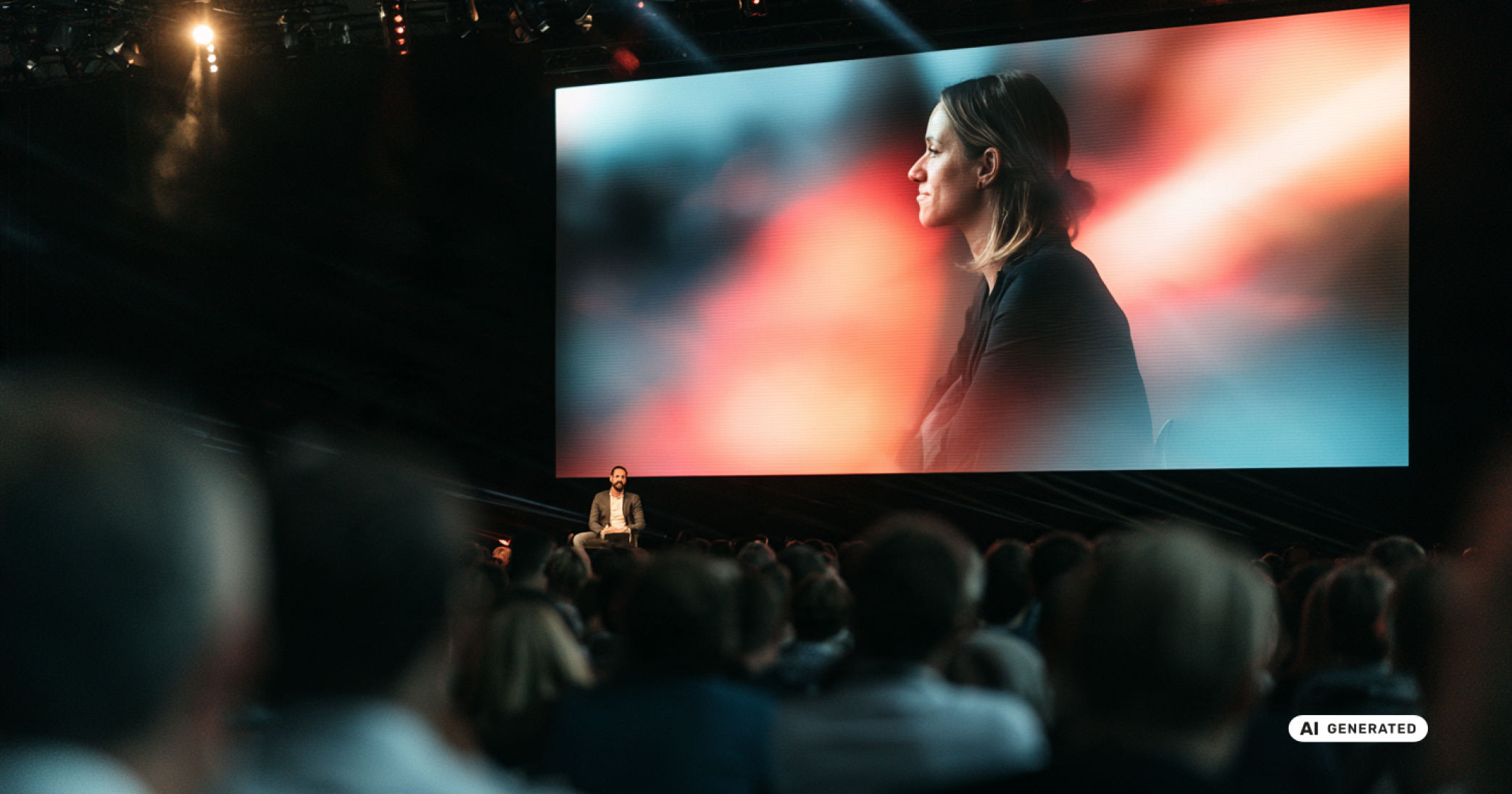
For a long time, the agency was the operating system of brand communications. Brief in, campaign out — eventually, after multiple rounds of feedback, two strategy presentations, and a kickoff meeting that wasn’t really a kickoff. The model worked as long as everyone involved shared the same constraints. They no longer do.
What’s emerging now looks quite different: individuals equipped with AI tools for copy, image, video, and audio are delivering production output that agencies would have quoted five-figure budgets for just three years ago. This isn’t a niche phenomenon of the creator economy. It’s a structural shift that affects brands, marketers, and agencies alike — and raises a serious question about which model will actually hold up in the next phase of content production.
The argument is straightforward: AI-powered solo studios aren’t simply cheaper. They’re faster, closer to the work, and structurally leaner — because they cut the overhead that makes agencies expensive.
Where Agency Overhead Comes From — and Why It’s So Hard to Avoid
Traditional agencies are coordination machines. Their value lies not primarily in creative ideas, but in their ability to synchronize many specialists: strategy, concept, copy, design, motion, production, account management, QA. Each of these roles serves a purpose. But each one costs money, even when it isn’t actively producing anything.
The result is a pricing model where brands pay for capacity, not output. Day rates, retainers, hourly budgets — overhead is built into the structure. Add to that the internal communication loops between roles that have to align before anything reaches the client. A concept travels through account management, the creative director, the copywriter, the design team, and back again. That takes time.
For many brands, this was acceptable for a long time, because there was no alternative. Good production required resources, and resources required structures. That connection is now coming apart.
What Solo AI Studios Do Structurally Differently
An AI studio run by a single person has no account manager mediating between creative and client. There’s no internal approval loop. The person who develops the concept also produces and delivers. That’s not amateurism — it’s a different production model.
AI takes on the roles that specialists previously filled. Draft copy, image generation, video sequences, voiceovers, editing suggestions — all of this now runs through tools that one person can operate, provided they know how. The creative bottleneck shifts: away from craft, toward ideas and the ability to work effectively with AI.
In concrete terms, this is what it means for brands:
Shorter decision loops. No account briefing, no internal handoff. The person who understands what’s needed starts producing.
Lower fixed costs. No overhead for roles that are only needed on certain projects.
Faster iteration. Variations are ready in hours, not days, because there’s no approval process in the way.
Proximity to production. Whoever develops the concept also owns the output. The translation loss between strategy and execution disappears.
This might sound like a pitch for freelancers. It isn’t. It’s a description of what AI tools now make structurally possible — and what wasn’t possible before.
Which Brands and Tasks This Model Actually Suits
Not every campaign fits this model. Global brands with regulatory requirements, complex stakeholder structures, and simultaneous productions across multiple markets still need coordinated teams. That isn’t going away.
But a significant portion of the production volume currently flowing through agencies doesn’t carry that complexity. Social content, product videos, campaign variations, always-on material, test formats for new channels — these are tasks where speed and cost efficiency often matter more than production depth.
This is precisely where AI video content workflows and solo studios have the edge. A brand team that needs fresh content for three channels every week is paying for agency overhead it doesn’t actually need. An AI studio delivers the same volume at a fraction of the coordination cost.
The key is matching: which task requires which structure? Brands that can answer that clearly come out ahead on both sides — they keep the agency for work that genuinely requires coordination, and route everything else to structures built for the job.
What This Means for Traditional Agencies
Agencies face a question that’s uncomfortable precisely because it’s structural: what are brands actually paying for when AI tools handle the production side?
The honest answer: coordination, strategic framing, brand protection in complex situations, and accountability. An agency carries liability in a way that a solo studio does not. That’s not fine print — it’s a real and meaningful distinction.
Agencies that recognize this are already repositioning: stepping back from production overhead and moving toward strategic oversight and quality assurance. They become the layer above the AI studios — curating, briefing, reviewing. That’s a different business model, but it’s one that holds.
What doesn’t hold is carrying on as before and hoping brands won’t notice the price difference. They will. Anyone still dismissing AI video is going to miss the next content wave — and that applies to brands just as much as it does to agencies.
Risks and Open Questions the Model Hasn’t Resolved
Solo AI studios have blind spots. Quality assurance without a second set of eyes is structurally weaker. Scaling under peak demand is limited. And the ethical responsibility around AI-generated content — copyright, transparency, brand safety — rests with a single person who may have no legal layer to fall back on.
These aren’t theoretical concerns. Brands that work with AI studios need to address them directly:
- Who checks whether generated content infringes third-party rights?
- How is brand consistency maintained when there’s no creative direction function?
- What happens if the studio goes offline — illness, overload, or a sudden end to the relationship?
Maintaining the balance between innovation and ethical responsibility is an operational requirement here, not a formality. Brands should factor this into their decisions — not as an argument against the model, but as a condition for using it well.
The Next Phase of Production Will Be Hybrid
The question isn’t whether AI studios will replace traditional agencies. The question is which tasks will migrate where — and how quickly.
What’s becoming clear: brands that work this out early will gain speed and cost efficiency in the areas that allow for it. They’ll retain agencies for work that genuinely requires coordination, strategy, and accountability. And they’ll build internal competence to manage both effectively.
Solo AI studios are not a transitional phenomenon. They represent a new chapter in the production landscape — one that emerged because text-to-video workflows and AI tools have fundamentally lowered the barrier to professional-grade output. Reading that as a threat is a way of losing time. Reading it as a structural question is a way of acting on it.
The foundation of the next agency model won’t be built on more coordination. It will be built on less of it — and on greater clarity about where it’s genuinely needed.